Setting a Golden Retriever Puppy Feeding and Potty Schedule
General nutrition information compiled from product labels and published sources, not veterinary advice. Your veterinarian is the right person to choose a diet for your dog, especially one with a health condition.
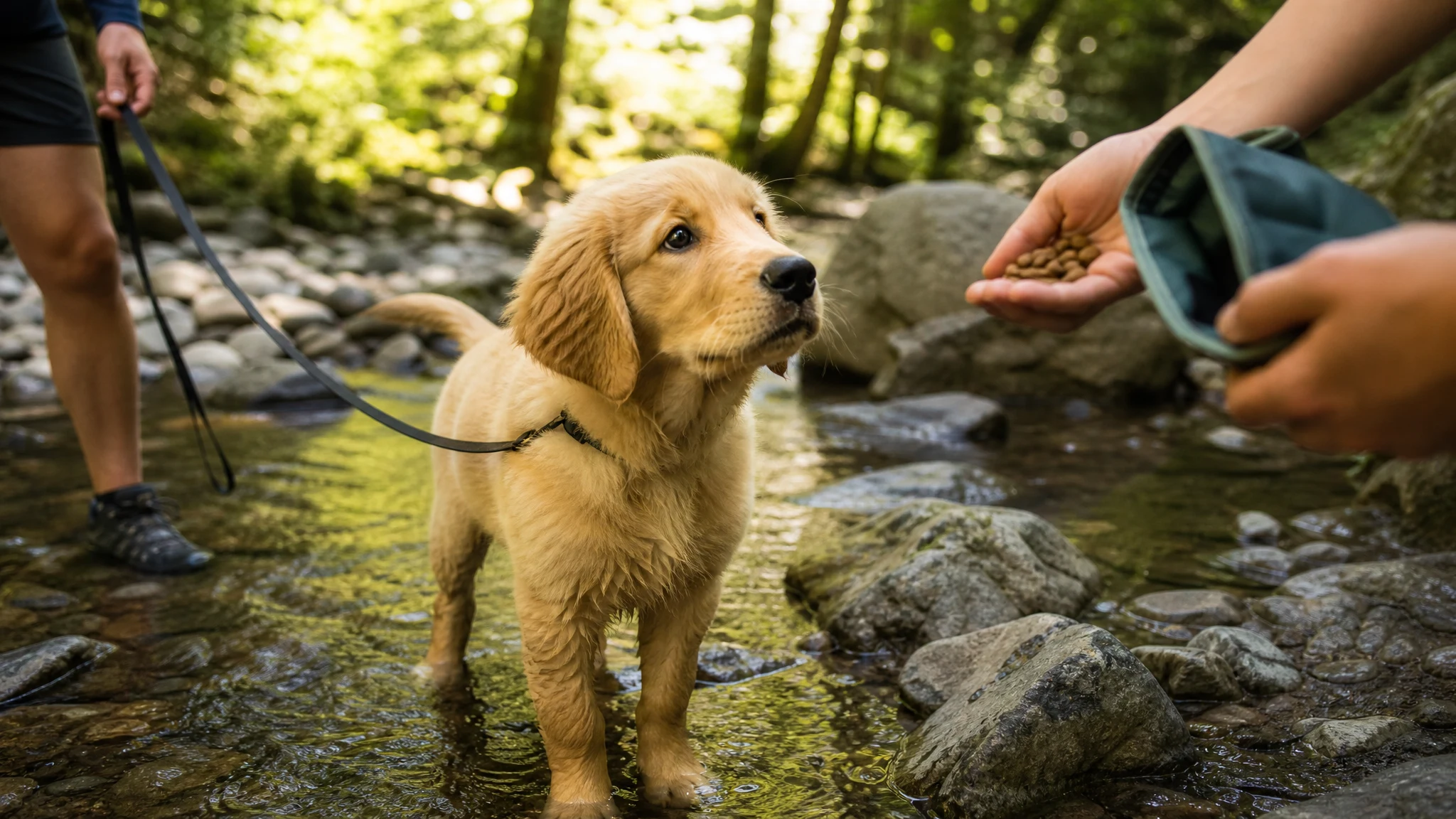
A Golden Retriever puppy does best when meals, potty breaks, naps and play happen in a predictable order. A steady golden retriever puppy schedule also makes house training easier, because food going in and waste coming out follow a rhythm you can learn.
This guide walks through building that routine step by step. It also covers how to size meals for a large, fast-growing breed without pushing growth too hard.
What You Need Before You Start
- A puppy food with an AAFCO statement on the bag. For a Golden Retriever, look for wording that ends with "including growth of large size dogs (70 lb. or more as an adult)."
- A kitchen scale or a dry measuring cup. Grams are more exact than cups.
- A feeding bowl and a water bowl.
- A leash and a fixed potty spot outside.
- Small, soft treats for rewarding the puppy right after it goes outside. Count them as part of the daily food total.
- A crate or a gated resting area.
- A notebook or phone note to log meals, potty breaks and weights.
- Your veterinarian's phone number, since you will confirm amounts with them.
Why a Golden Retriever Needs a Careful Plan
The Golden Retriever Club of America's breed standard gives adult males 65 to 75 pounds and adult females 55 to 65 pounds. That makes the breed large, and the top of the male range sits above the 70 pound cutoff AAFCO uses for large-size dogs.
Cornell University College of Veterinary Medicine notes that canine hip dysplasia is genetic but can be modified by nutrition and growth rate. It says overfeeding and rapid growth can make it worse in predisposed dogs. Cornell advises a diet formulated for large breeds while puppies grow, no calcium or vitamin D supplements for growing puppies, and avoiding overfeeding.
Cornell also lists Golden Retrievers as a predisposed breed for panosteitis, a growing-bone pain in young large-breed dogs. It recommends a commercial large-breed puppy diet formulated to an AAFCO growth statement. None of this means food prevents or treats these conditions. It means portion control and the right formula are sensible habits, and your veterinarian decides what fits your puppy.
Step-by-Step: Build the Schedule
Step 1. Pick a formula with the right AAFCO statement
Read the nutritional adequacy statement. Under the AAFCO rule as adopted in Washington Administrative Code 16-252-044, foods claiming Growth or All Life Stages must end the statement with either "including growth of large size dogs" or "except for growth of large size dogs." Choose "including" for a Golden Retriever.
Some products on the market make this claim in their own wording. For example, Royal Canin's Large Puppy page and several Freshpet puppy recipes state they meet AAFCO growth levels including large size dogs. Royal Canin's Golden Retriever Puppy page did not show a full AAFCO statement where we looked, so check the bag or ask the brand. Our ranked look at puppy foods for Golden Retriever puppies compares label data, not feeding trials or taste tests.
Step 2. Get the starting amount from the label, then confirm it
Every brand prints a feeding guide, and that guide is a starting point only. Royal Canin says its guide is only a guide and that grams are more accurate than cups. Hill's says to adjust amounts as needed to maintain optimal weight and to ask your veterinarian if unsure. Freshpet asks you to select your dog's weight to see a normal daily amount.
Use your puppy's current weight and age to find the row on the chart. Some charts also use expected adult weight, so use the breed standard range above as a rough guide. Then ask your veterinarian to confirm the daily total at the next visit, especially during a growth spurt or any health concern.
Calorie density differs a lot between foods. Label data lists Hill's Science Diet Puppy Large Breed at 387 kcal per cup, Royal Canin Large Puppy at 349 kcal per cup, and Victor Classic Hi-Pro Plus Large Breed Puppy at 365 kcal per cup. A cup of one is not a cup of another, so never swap foods and keep the same scoop.
Step 3. Divide the daily total into set meals
Split the day's food into scheduled meals instead of leaving a full bowl out. How many meals suits your puppy at its age is a question for your veterinarian, so do not guess from a general chart. Whatever the number, keep the times the same each day, for example morning, midday and evening, and set the bowl down for a limited time.
Weigh or measure every meal. Eyeballing is how a puppy slowly gets too much.
Step 4. Anchor potty breaks to the meals
Take your puppy to the same outdoor spot at these moments:
- First thing after waking, including after naps.
- Shortly after each meal.
- After a play session or excited greeting.
- Right before bed and before being left in the crate.
Stand quietly, use one cue word, and reward with a small treat the moment your puppy finishes. Reward-based training is the approach the American Veterinary Society of Animal Behavior supports. Never punish an accident. Clean it with an enzyme cleaner and take your puppy out sooner next time.
Step 5. Build in naps and calm time
Puppies sleep a lot. Plan rest after meals and play, in a crate or gated area, then go straight outside when the puppy wakes. A sample day might run like this:
| Time block | What happens |
|---|---|
| Wake up | Potty trip, then breakfast |
| After breakfast | Potty trip, short play, nap |
| Midday | Potty trip, meal if your vet advises one, potty trip again |
| Afternoon | Training games, potty trip, nap |
| Evening | Dinner, potty trip, calm play |
| Bedtime | Last potty trip, then crate |
Treat this as a template. Your own day, and your puppy's age, will change the times.
Step 6. Log and adjust
For the first few weeks, write down meal times, amounts, potty breaks and accidents. Patterns show up fast, such as a puppy who always needs to go twenty minutes after dinner. Weigh your puppy on a regular basis and bring the log to vet visits. Growth is not a straight line, so any change to the daily amount should go through your veterinarian.
Step 7. Change foods slowly, and stay on a puppy formula long enough
If you switch brands, mix the new food in gradually over several days so the schedule is not disrupted by an upset stomach. Ask your veterinarian for a pace that suits your puppy.
PetMD suggests feeding a large-breed puppy formula until about 12 to 18 months of age, depending on the veterinarian's recommendation. Treat that as a range to discuss, not a fixed date.
Tips That Make the Routine Stick
- Keep treats inside the budget. Subtract them from the day's meals.
- Be consistent across the household. Everyone uses the same scoop, the same cue word and the same potty door.
- Pick up the water bowl timing with your vet. Fresh water should stay available, but ask whether to adjust it near bedtime.
- Watch the body, not just the bowl. Ask your veterinarian to show you how to feel ribs and waistline so you can spot extra weight early.
- Know what wet and fresh foods change. Canned Hill's puppy recipes list calories per can, not per cup, and fresh foods list calories per kilogram or per pack. Convert carefully with the brand's own guide.
Common Mistakes to Avoid
- Using an adult or standard puppy food. Hill's own page for its standard Puppy recipe carries no large-breed calcium claim, and the large breed formula is the closer fit for a Golden Retriever.
- Adding calcium or vitamin D. Cornell advises against supplementing growing puppies with them. Ask your veterinarian before adding any supplement at all.
- Free-feeding. An always-full bowl makes it hard to control growth and hard to predict potty timing.
- Feeding by cup alone. Cups vary by scoop and kibble shape. Weigh when you can.
- Waiting for the puppy to signal. Young puppies often give little warning. Go on schedule.
- Scolding accidents. It teaches hiding, not outdoor potty habits.
- Chasing a grain-free label. The FDA's investigation into diets and canine dilated cardiomyopathy (DCM) notes Golden Retrievers may be genetically predisposed to taurine deficiency linked to DCM, and also notes reporting bias for the breed. The FDA's last update on that page was dated December 23, 2022, and it said it did not plan further public updates without meaningful new science. Check the FDA page and talk to your veterinarian about the formula you choose.
What to Expect
Many owners find that a steady routine makes potty timing more predictable within a few weeks, though puppies vary and accidents are normal. A measured feeding plan may help your puppy grow at a steadier pace, but no food or schedule guarantees a particular outcome for hips, joints or any other condition. Your veterinarian can track growth and tell you if the plan needs a change.
Some conditions that affect Golden Retrievers, such as atopic dermatitis, are triggered by environmental allergens according to PetMD, and are not shown to be caused by diet there. If you see itching, loose stools or a drop in appetite, call your veterinarian rather than changing the schedule on your own.
Sources
- Golden Retriever Club of America, Official Standard of the Golden Retriever
- Cornell University College of Veterinary Medicine, Canine hip dysplasia (CHD)
- Cornell University College of Veterinary Medicine, Panosteitis in dogs
- Washington Administrative Code 16-252-044, via Cornell LII
- FDA CVM, Investigation into potential link between certain diets and canine DCM
- PetMD, Golden Retriever Dog Breed Health and Care
- Royal Canin US, Large Puppy dry dog food
- Hill's Pet Nutrition, Science Diet Puppy Large Breed
- Freshpet, Multi-Protein Puppy Recipe