Complete Golden Retriever Puppy Feeding Guide by Month
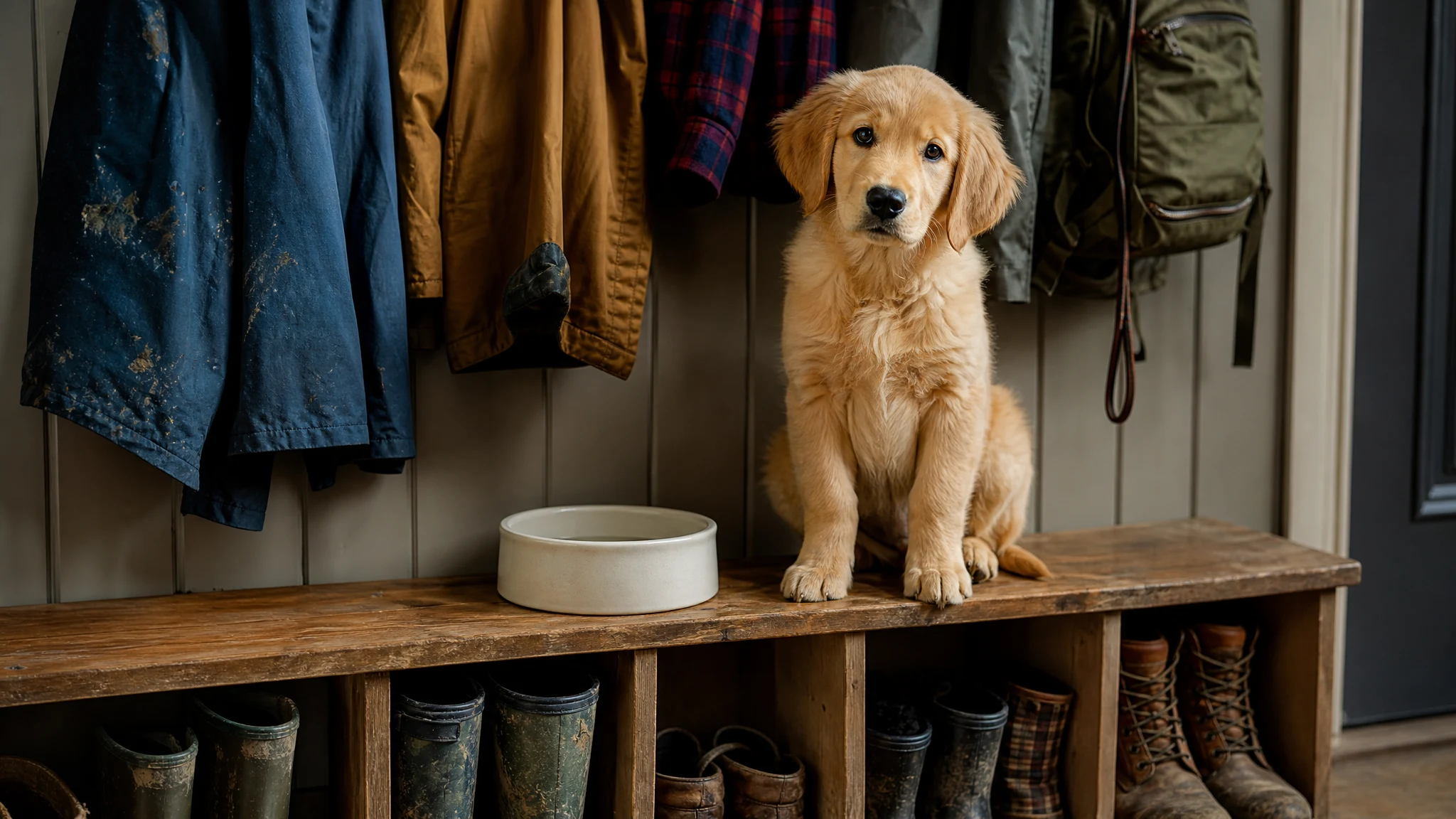
General nutrition information compiled from product labels and published sources, not veterinary advice. Your veterinarian is the right person to choose a diet for your dog, especially one with a health condition.
Feeding a Golden Retriever puppy is less about finding a magic food and more about three habits: choosing a growth formula that fits a large breed, measuring portions, and adjusting as your puppy changes. This golden retriever puppy feeding guide walks through those steps in order, then covers each stage from the first weeks home to about 18 months.
One note on method. We compared label data published by each brand. We did not run feeding trials or taste tests, so nothing here says one food works better than another in a real dog.
What you need before you start
- A puppy food with an AAFCO nutritional adequacy statement for growth, ideally one that includes large-size dogs.
- A kitchen scale or a dry measuring cup. The scale is more accurate.
- A notebook or phone note for weight and body condition checks.
- Your veterinarian's contact details for weigh-ins and questions.
You do not need calcium or vitamin D supplements. Cornell University College of Veterinary Medicine advises against supplementing growing puppies with calcium and vitamin D.
Why a Golden Retriever puppy needs a large-breed approach
The Golden Retriever Club of America breed standard lists adult males at 65 to 75 pounds and females at 55 to 65 pounds. AAFCO's large-size cutoff is 70 pounds or more as an adult. That means a male can land above the line, while a female may land below it. Because your puppy's adult size is not certain, a large-size growth formula is the usual cautious choice.
Cornell's veterinary college says hip dysplasia is genetic but shaped by nutrition and growth rate. It says overfeeding and rapid growth can make it worse in dogs that are predisposed. Cornell also lists Golden Retrievers as a breed predisposed to panosteitis, a growing-bone pain in young large dogs. For that, it recommends a commercial large-breed puppy diet formulated to an AAFCO growth statement.
This does not mean a food can prevent or treat these conditions. It means steady growth is the goal, not the fastest growth.
Step 1: Read the AAFCO statement first
Find the small print on the bag or the brand's product page. Under the Washington Administrative Code rule that adopts the AAFCO model, foods claiming growth or all life stages must end the statement one of two ways:
- "including growth of large size dogs (70 lb. or more as an adult)", or
- "except for growth of large size dogs (70 lb. or more as an adult)".
Choose the "including" version. If you cannot find the statement, ask the brand directly. For example, the Royal Canin Golden Retriever Puppy page we opened did not show a full adequacy statement, so confirm it with Royal Canin before you buy.
Step 2: Compare a few labels
Here is label data from the brands' own pages. Calories per cup vary a lot, so the same cup of two foods is not the same amount of energy.
| Food | Form | Label calories | Large-size growth wording |
|---|---|---|---|
| Royal Canin Large Puppy | Dry | 349 kcal per cup | Growth including large size dogs |
| Hill's Science Diet Puppy Large Breed Chicken & Brown Rice | Dry | 387 kcal per cup | Large breed puppy; feeding-test statement for growing puppies |
| Victor Classic Hi-Pro Plus Large Breed Puppy | Dry | 365 kcal per cup | All life stages, page also covers growth of large dogs |
| Freshpet Multi-Protein Puppy Recipe | Fresh | 241 kcal per cup | Growth including large size dogs |
For a longer comparison, see our ranked list of puppy foods for Golden Retriever puppies.
Brand pages: Royal Canin Large Puppy, Hill's Science Diet Puppy Large Breed, Victor Hi-Pro Plus Large Breed Puppy, Freshpet Multi-Protein Puppy Recipe.
Step 3: Start with the label guide, then adjust
Every brand prints a feeding chart based on weight or age. Treat it as a starting point only. Royal Canin notes that grams are more accurate than cups, and Hill's says to adjust amounts to maintain optimal weight and to ask your veterinarian if unsure.
Weigh the food for a week. Then check your puppy's body. You should be able to feel the ribs under a light covering, and see a waist from above. If the ribs are hard to feel, reduce the portion a little and recheck in a week or two. If they are very easy to see, ask your vet.
Step 4: Follow the growth stages
We do not give a gram amount for each month, because no reliable single number fits every Golden Retriever. Amounts depend on the food's calories, your puppy's current weight, expected adult weight and activity. Use the label chart and your vet's weigh-ins.
Newly home to about 3 months
Keep the food the breeder or rescue was using for the first days, then switch slowly if you plan to change. Mix a little new food into the old and increase it over about a week or longer. Ask your vet how many meals a day suit your puppy at this age.
About 3 to 6 months
Growth is quick. This is when overfeeding is easiest, because appetite is big and the puppy looks lean. Recheck the label guide against the current weight at each vet visit rather than guessing.
About 6 to 12 months
Growth continues but usually the weight gain is less dramatic. Keep measuring, and use body condition checks. Your vet may suggest changing meal frequency. Do not drop to a lower-protein or adult food on your own.
About 12 to 18 months
PetMD says large-breed puppy food is generally fed until 12 to 18 months, depending on the veterinarian's recommendation. Ask your vet when your Golden Retriever is ready for an adult formula, then switch gradually.
Step 5: Handle treats and extras
Treats and training rewards add calories. Use small pieces, and take them into account when you look at the day's total. Avoid adding calcium powders or other supplements unless your vet specifically tells you to.
Tips for steady results
- Weigh your puppy on the same scale on a regular schedule and write it down.
- Change foods slowly, over about a week or more.
- Re-measure after any vet visit, growth spurt or change in activity.
- Keep one measuring tool and use it every time.
Common mistakes to avoid
- Free feeding. Leaving food out makes portions impossible to track.
- Copying a friend's cup amount. A cup of one food can have far more calories than a cup of another.
- Using a standard puppy food by default. Some puppy foods do not carry a large-breed claim. Check the statement.
- Adding supplements. Cornell advises against calcium and vitamin D for growing puppies.
- Chasing the biggest puppy. Rapid growth is not a goal for this breed.
- Judging a food by the grain-free label alone. The FDA has investigated a possible link between certain diets and canine dilated cardiomyopathy (DCM). It notes Golden Retrievers may be genetically predisposed to taurine deficiency, and also notes reporting bias for the breed. Its latest update on that page was dated December 23, 2022. Ask your vet what this means for your dog.
What to expect
With a suitable growth formula, measured portions and regular weigh-ins, many owners find their puppy grows at a steadier pace and keeps a lean body condition. Results vary. Food does not decide your dog's genetics, and no diet can promise to prevent or treat hip problems, allergies or other conditions. Goldens are noted by PetMD as prone to atopic dermatitis, which is triggered by environmental allergens and is not shown on that page to be caused by diet.
Call your veterinarian if your puppy refuses food, has ongoing stomach upset, grows unusually fast, or seems sore or limping. Confirm any amount with your vet, especially during a growth spurt or if there is a health concern.
Sources
- Golden Retriever Club of America, Official Standard of the Golden Retriever
- Cornell University College of Veterinary Medicine, Canine hip dysplasia
- Cornell University College of Veterinary Medicine, Panosteitis in dogs
- Washington Administrative Code 16-252-044, via Cornell LII
- FDA CVM, Investigation into potential link between certain diets and canine DCM
- PetMD, Golden Retriever Dog Breed Health and Care