What Is the Best Food for Golden Retriever Puppies? A Label Guide
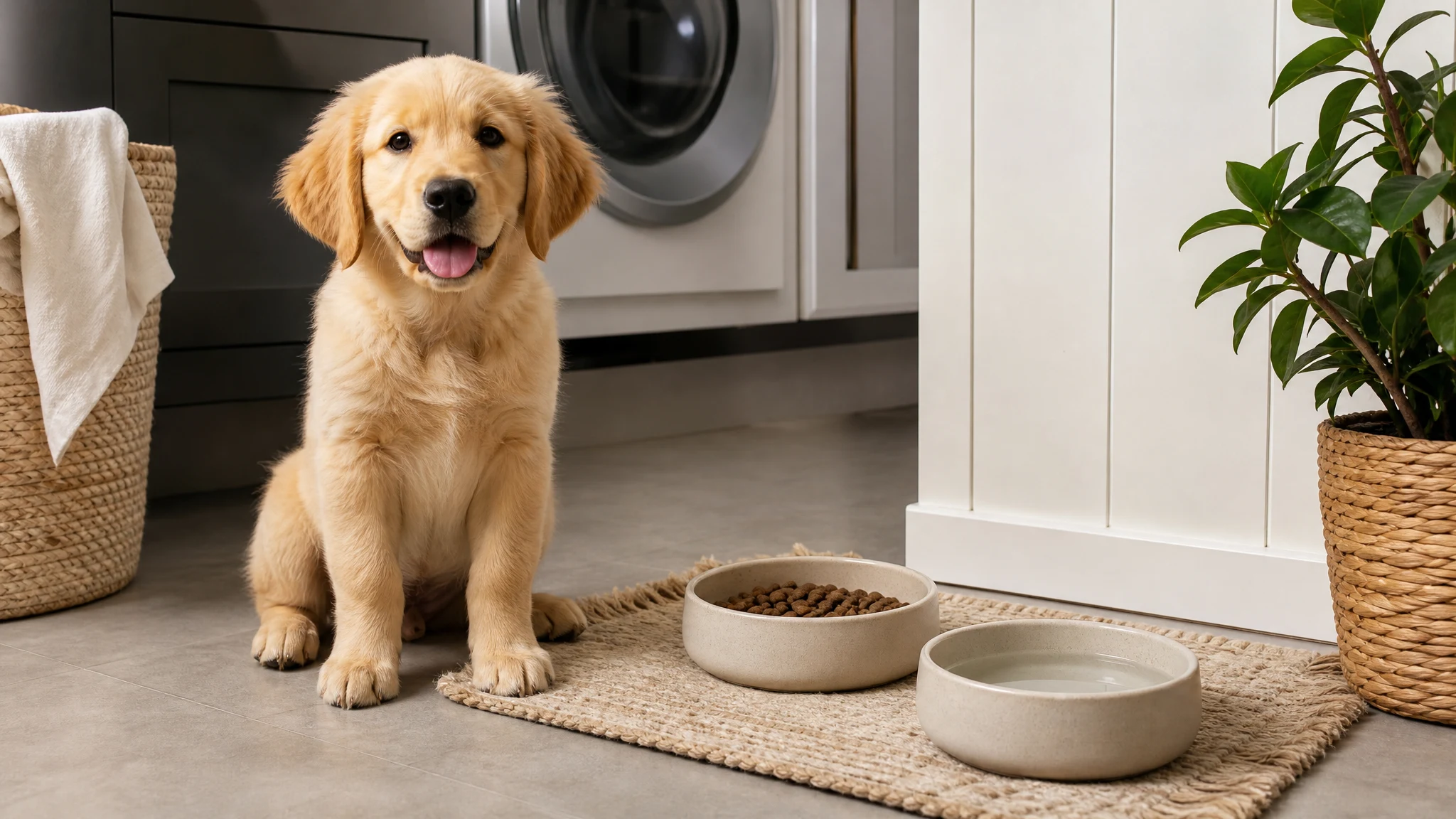
General nutrition information compiled from product labels and published sources, not veterinary advice. Your veterinarian is the right person to choose a diet for your dog, especially one with a health condition.
Every bag claims to be right for your puppy. The label is where the claims get specific. This guide shows you how to read it, so you can answer "what is the best food for Golden Retriever puppies" for your own dog, with your veterinarian.
There is no single winner. The best food is a complete growth formula that suits a large breed, that your puppy tolerates, and that you can feed in measured amounts. Here is how to check each part.
How we compared foods
We compared label data published on each brand's own product page. That means the AAFCO statement, ingredients, protein, fat and calories. We did not run feeding trials or taste tests, and we cannot tell you how a puppy will do on any food. Where a page did not publish a number, we say so instead of guessing.
What you need
- The bag, can or package of each food you are considering, or its brand product page.
- Your puppy's current weight and age.
- A kitchen scale. Grams are more accurate than cups.
- A notepad or phone to write down label numbers side by side.
- Your veterinarian's contact details for the final decision.
Why Golden Retriever puppies need a large-breed approach
The Golden Retriever Club of America's breed standard lists adult males at 65 to 75 pounds and females at 55 to 65 pounds. The top of the male range is above the 70 pound cutoff AAFCO uses for large-size dogs, so a large-breed growth formula is the sensible starting point.
Cornell University's College of Veterinary Medicine says hip dysplasia is genetic but can be modified by nutrition and growth rate. It advises using a diet made for large breeds, avoiding overfeeding and rapid growth, and not adding calcium or vitamin D to a growing puppy's diet. Cornell's page on panosteitis, a growing-bone pain that lists Golden Retrievers as a predisposed breed, recommends a commercial large-breed puppy diet formulated to an AAFCO growth statement.
None of this means a food prevents or treats any condition. Your veterinarian decides what is right for an individual dog.
Step 1: Find the AAFCO adequacy statement
This sentence is the most useful line on the package. It says whether the food is complete and balanced for growth, and how that was shown.
Under Washington Administrative Code 16-252-044, which adopts the AAFCO model, a food claiming Growth or All Life Stages must end its statement with one of two phrases:
- "including growth of large size dogs (70 lb. or more as an adult)", which means it meets the large-size nutrient levels.
- "except for growth of large size dogs (70 lb. or more as an adult)", which means it does not.
For a Golden Retriever puppy, look for "including." A food with "except" is not the match, even if the front of the bag shows a puppy.
What we found on the brand pages:
- Royal Canin Large Puppy states it meets AAFCO levels for growth including growth of large size dogs.
- Three Freshpet puppy recipes carry the same "including growth of large size dogs" wording.
- Victor Classic Hi-Pro Plus Large Breed Puppy is stated for all life stages, and its page also covers growth of large dogs. The full sentence was not captured, so read it on the bag.
- Hill's Science Diet Puppy Large Breed cites AAFCO feeding tests for growing puppies. The large-size wording was not shown in the text we reviewed, so check the bag.
- Royal Canin's Golden Retriever Puppy page showed no AAFCO statement. Check the bag or ask the brand.
Step 2: Compare protein and fat the same way
Percentages on a label are not always comparable. Dry foods list as-fed minimums. Hill's pages show dry matter averages instead. Fresh foods contain a lot of water, so their percentages look low. Compare like with like, or ask the brand for a dry matter figure.
| Food (brand page data) | Protein | Fat | Calories |
|---|---|---|---|
| Royal Canin Large Puppy (dry) | 28% min | 14% min | 349 kcal per cup |
| Royal Canin Golden Retriever Puppy (dry) | 27% min | 14% min | 339 kcal per cup |
| Victor Classic Hi-Pro Plus Large Breed Puppy (dry) | 30% min | 14% min | 365 kcal per cup |
| Hill's Science Diet Puppy Large Breed (dry) | 26.7% dry matter avg | 15.4% dry matter avg | 387 kcal per cup |
| Freshpet Multi-Protein Puppy Recipe (fresh) | 16% min | 10% min | 241 kcal per cup |
The small gaps between the dry foods say little by themselves. Calories matter more for a breed where Cornell advises against overfeeding. Two foods with similar protein can differ in calories per cup, which changes how much goes in the bowl.
Step 3: Read the first five ingredients
Ingredients are listed by weight. The first five show the base of the recipe. Examples from the brand pages:
- Royal Canin Large Puppy: chicken by-product meal, corn, wheat, chicken fat, wheat gluten.
- Hill's Puppy Large Breed: chicken, brown rice, whole grain oats, chicken meal, cracked pearled barley.
- Victor Hi-Pro Plus Large Breed Puppy: chicken, chicken meal, brown rice, whole grain millet, whole grain sorghum.
- Freshpet Multi-Protein Puppy Recipe: chicken, eggs, beef, beef liver, green beans.
An ingredient list does not rank quality. "By-product meal" is not a warning on its own, and "chicken" listed first is not a guarantee of anything. Use the list to spot ingredients your puppy has reacted to before. PetMD notes Goldens are prone to atopic dermatitis, which is triggered by environmental allergens and was not shown to be caused by diet on that page. If you suspect a food reaction, ask your veterinarian before switching.
Step 4: Look for calcium, kcal and kibble size
Calcium matters for large-breed puppies, but the brand pages we reviewed did not publish a calcium percentage we could confirm. Ask the brand for it, or ask your veterinarian. One fresh brand's page describes a recipe as higher in calcium and phosphorus for growing puppies. That is a reason to ask questions, not a reason to add anything yourself. Cornell advises against calcium supplements for growing puppies.
Kibble size was not stated with measurements on any page we reviewed. Royal Canin describes its Golden Retriever Puppy kibble as breed-shaped, without dimensions, and Victor says only "appropriate kibble size" for large breeds. If size matters to you, ask the brand or buy the smallest bag first.
For calories, note the unit. Hill's canned puppy foods list calories per can, not per cup, and the fresh JustFoodForDogs recipes list calories per kilogram, per ounce and per package. Convert before comparing.
Step 5: Use the feeding guide as a starting point
- Find the feeding chart for your puppy's current weight and age.
- Weigh out the amount in grams if the label gives grams.
- Split it into the number of meals your veterinarian suggests.
- Check your puppy's body condition every couple of weeks and adjust with your veterinarian.
Royal Canin's page says its guide is only a guide and that grams are more accurate than cups. Hill's says to adjust amounts to maintain optimal weight and to ask your veterinarian if you are unsure. Treat every chart as a starting point, not a target.
Step 6: Choose a transition plan and a finish line
PetMD suggests feeding a large-breed puppy formula until about 12 to 18 months, depending on your veterinarian's recommendation. Ask when to move to an adult food. Change foods gradually, mixing the new food in over several days, and tell your veterinarian if your puppy has stomach upset.
Tips and common mistakes
- Trusting the front of the bag. "Puppy" on the front does not mean large-breed growth. Read the AAFCO statement.
- Choosing a standard puppy food. Hill's standard Puppy Chicken & Brown Rice page shows no large-breed claim. For a Golden Retriever, its Large Breed formula is the closer match.
- Feeding for fast growth. Cornell warns that overfeeding and rapid growth can worsen hip dysplasia in predisposed dogs.
- Adding supplements. Do not add calcium or vitamin D to a growing puppy's food.
- Comparing mismatched percentages. As-fed, dry matter and fresh-food numbers are not interchangeable.
- Assuming grain-free is safer. The FDA's investigation of diets and canine dilated cardiomyopathy (DCM) noted that Golden Retrievers may be genetically predisposed to taurine deficiency linked to DCM. The FDA also noted reporting bias for the breed. Its last update was December 23, 2022, and it said it did not plan more public updates without meaningful new science. Check the FDA page for anything newer and talk to your veterinarian about your puppy's diet.
- Switching constantly. Frequent changes make it hard to tell what is working.
What to expect
A food that matches the label checks above may help your puppy grow at a steady, moderate pace. Many owners find that measuring portions and tracking body condition makes feeding less guesswork. Results vary by dog, and a label cannot predict them. Your veterinarian can weigh your puppy, assess growth and tell you whether the food is working.
For a side-by-side look at specific foods, see our ranked list of puppy foods for Golden Retriever puppies.
Brand pages for the foods mentioned
- Royal Canin Large Puppy
- Royal Canin Golden Retriever Puppy
- Hill's Science Diet Puppy Large Breed
- Victor Hi-Pro Plus Large Breed Puppy
- Freshpet Multi-Protein Puppy Recipe
Sources
- Golden Retriever Club of America, Official Standard of the Golden Retriever
- Cornell University College of Veterinary Medicine, Canine hip dysplasia (CHD)
- Cornell University College of Veterinary Medicine, Panosteitis in dogs
- Washington Administrative Code 16-252-044, via Cornell LII
- FDA CVM, Investigation into potential link between certain diets and canine DCM
- PetMD, Golden Retriever Dog Breed Health and Care